
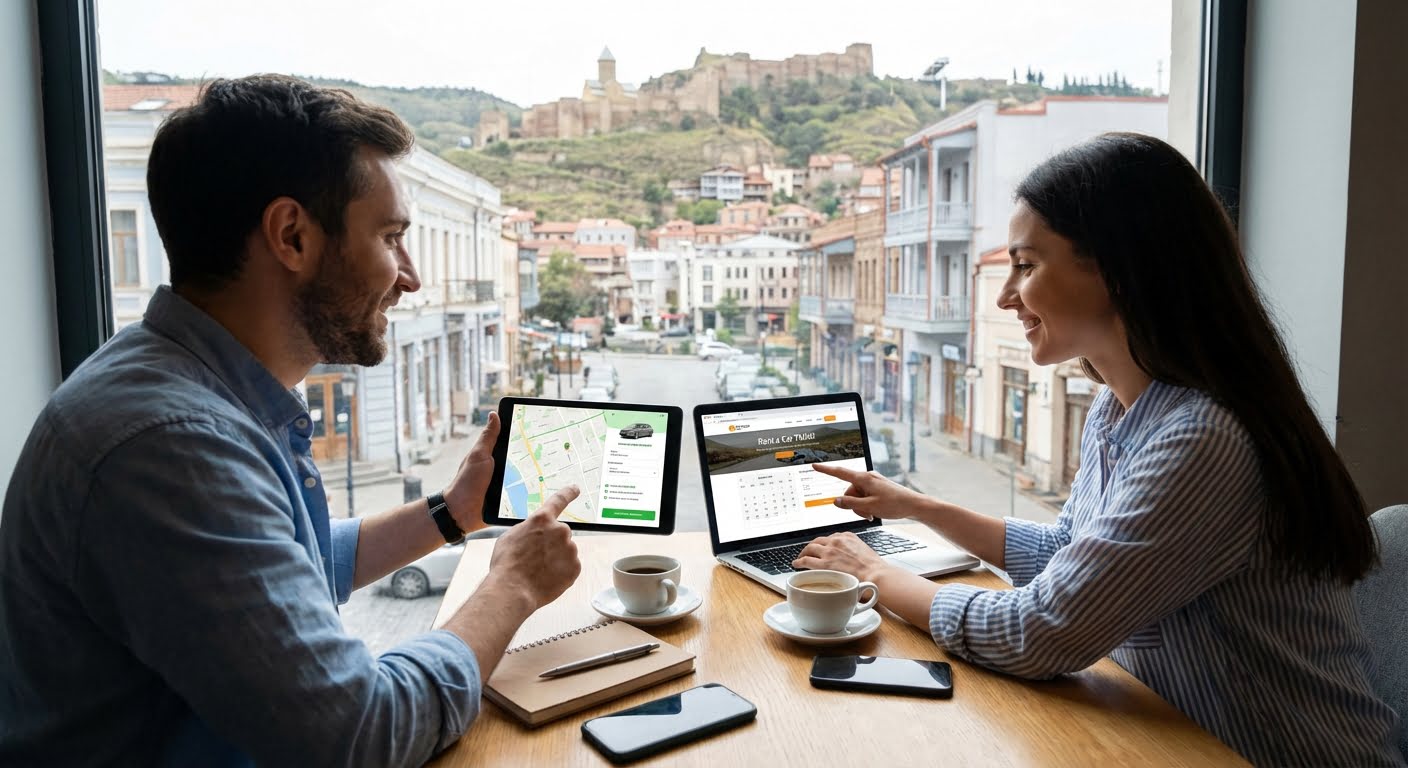
Tbilisi is not a city you conquer on foot. Sidewalks vanish mid-block, hills appear without warning, and the metro covers only a fraction of what you’ll actually want to see. That’s why travelers increasingly turn to car rental Tbilisi services before they even land — and why the way people book those rentals has changed significantly.
Online platforms and digital payment tools have reshaped the rental market here, just as they have across the global industry. According to Statista, online channels are projected to account for 75% of all car rental revenue worldwide by 2030. In Georgia, where international visitor numbers reached 5.09 million in 2024 — up 9% year-on-year — that digital shift is playing out in real time.
Why Tbilisi Demands a Car
Public transport works for locals who know its rhythms. For visitors, it rarely reaches the places worth going: Mtskheta, the Kakheti wine region, the Georgian Military Highway toward Kazbegi. A rental car solves that instantly.
The old rental model meant paper forms and prices that sometimes differed from what was quoted. That gap is mostly closed now. Online aggregators show real-time pricing, verified insurance terms, and user reviews — all before you hand over a card number.
Here’s what digital booking gives you in practice:
- Price comparison across multiple suppliers — side by side, in the same currency
- Transparent total cost — taxes, CDW, and deposit shown before confirmation
- Flexible cancellation — most online bookings allow free cancellation up to 24–48 hours before pickup
- Delivery to your hotel or apartment — many Tbilisi operators offer this for city-center locations
Choosing the Right Platform
Not all booking sites work the same way. Some are direct rental operators; others are aggregators pulling inventory from local companies. Knowing the difference saves time and money.
| Platform type | Best for | Watch out for |
| Direct operator site | Fixed fleet, local support | Limited price comparison |
| Aggregator (Kayak, Rentalcars) | Comparing multiple suppliers | Third-party dispute resolution |
| Local marketplace | Niche vehicles, mountain SUVs | Fewer reviews, variable terms |
The practical rule: use an aggregator to find the best rate, then verify the supplier’s own site for terms. Pay attention to the deposit amount — Tbilisi rentals often require a security block of 300–500 GEL on your card, even with full insurance included.
Documents, Age, and Payments
Georgia accepts foreign driver’s licenses for tourist rentals, but requirements vary by operator. Most companies ask for:
- Valid national driver’s license (held for at least 1 year)
- Passport
- Credit or debit card for the security deposit
The minimum driver age is typically 21. Some operators apply a young-driver surcharge for those under 25, and a handful require drivers to be at least 23 for SUVs or premium vehicles.
Digital payments — Google Pay, Apple Pay, international Visa and Mastercard — are accepted by established operators. Smaller local companies may still prefer cash deposits. Check this before booking if you’re traveling without a credit card.
Choosing the Right Vehicle
Tbilisi city driving is manageable in a compact car. But if your itinerary includes mountain routes — the road to Kazbegi or the Svaneti highway — vehicle choice becomes a serious practical question, not just a comfort preference.
Match your vehicle to your route:
- Economy sedan — city exploration, paved regional roads
- Compact crossover — Kakheti wine region, Mtskheta, Gori
- SUV or 4WD — Kazbegi, Mestia (Svaneti), unpaved mountain sections
- Minivan — groups of 5+, heavy luggage, airport transfers
Economy options start around $16–20/day on aggregator platforms; full SUVs run $45–75/day depending on season. August is peak demand — fleet occupancy climbs, and the best vehicles book out weeks ahead. Plan accordingly.
Parking and Traffic
Digital tools help you book the car. What they don’t prepare you for is parking in Tbilisi’s old town. The historic center has limited spots, and enforcement cameras are active throughout the city.
Paid parking zones are marked by blue lines. The city’s TbilisiPark app lets you pay by phone — a useful tool many visitors miss. Most central hotels can advise on nearby garages.
Traffic cameras also monitor speed and red-light violations. Fines can follow you home via the rental company’s damage recovery process. Keep to posted limits: 50 km/h within the city, 80 km/h outside residential areas unless marked otherwise.
FAQ
It depends on your nationality and the operator. EU, UK, US, and many CIS-country licenses are typically accepted directly. Some companies require an IDP for licenses in non-Latin scripts. Confirm with your supplier before travel.
Yes. The airport is about 17 km from the city center. Airport pickups sometimes carry a small surcharge — compare this against the cost of a city-center pickup combined with a taxi.
Main highways are in good condition. Mountain roads require attention and the right vehicle. Driving style in Tbilisi is assertive — defensive driving is recommended, especially at intersections without traffic lights.
One-way rentals are available but usually carry a drop-off fee. Request one-way pricing at booking — don’t assume it’s included in the base rate.
For most visitors, yes. CDW removes your liability for vehicle damage. Without it, you’re personally responsible for repair costs that can reach thousands of GEL — particularly relevant on mountain routes where minor scrapes are more common.

